
News
Google's Deep Review puts AI to work checking technical documents
Deep Review examines technical documents for weak reasoning and inconsistencies. AIS explains the research and why human review still matters.
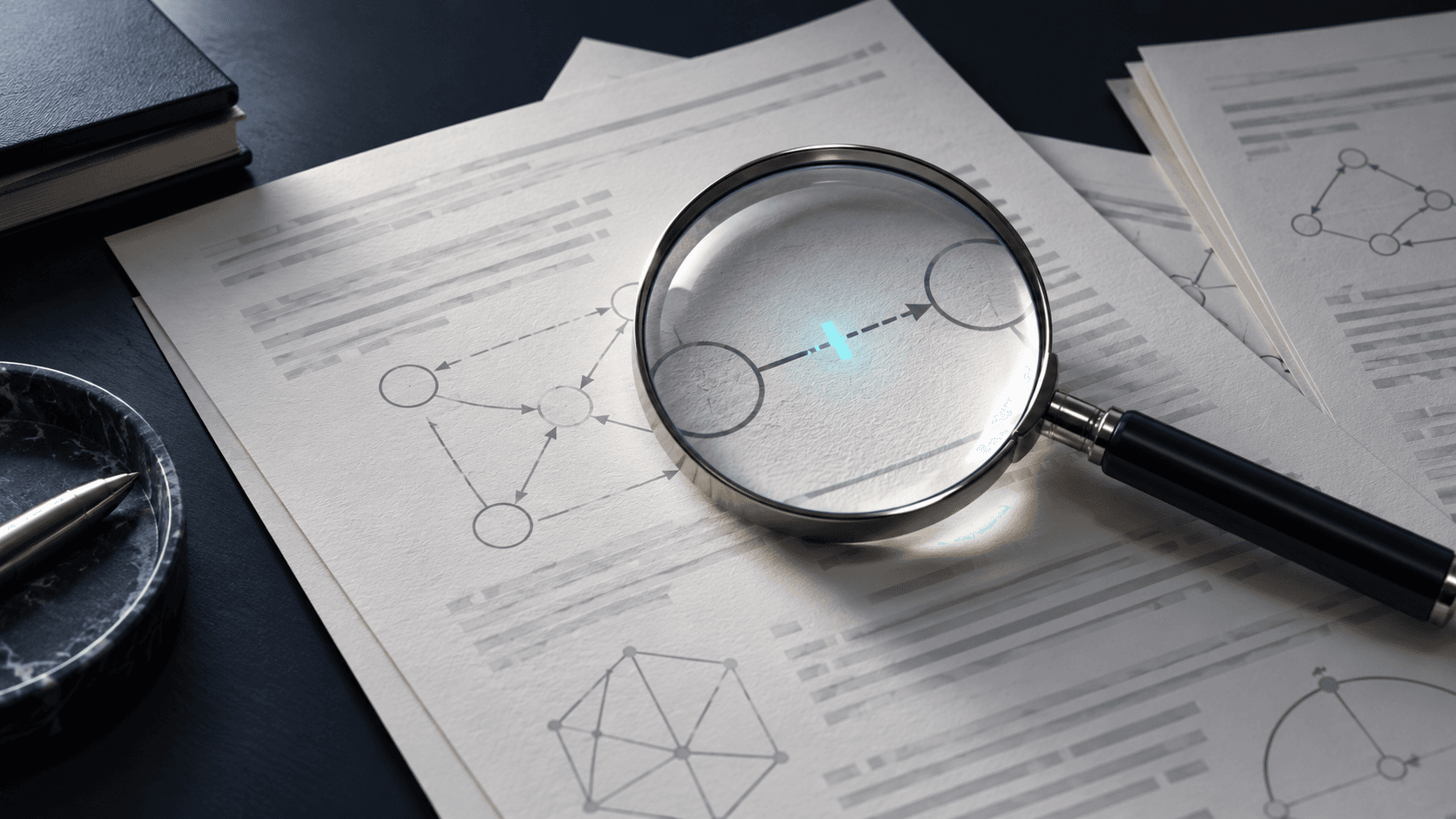
Google Research announced Deep Review on October 14, 2026, an AI system designed to inspect complex documents for problems in reasoning, mathematics and supporting evidence. It developed from the company's experimental Paper Assistant Tool, or PAT.
The distinction is practical: generating a convincing document and checking whether its argument holds are different jobs. Deep Review is intended to help with the second. It does not transfer responsibility for a consequential decision to a machine.
A review assembled from several checks
The announced process divides a document into logical segments and assigns computing effort according to their complexity. Separate agents examine those segments while retaining the wider document as context. A final stage combines their findings, checks consistency across sections and looks for external support.
Google describes a technical aid, with higher-level judgment remaining a human responsibility. That matters when an issue is ambiguous: a flagged passage is something to investigate, not an automatic verdict.
The research behind the tool
A June 26, 2026 paper on PAT describes an earlier scientific-review system that examined full manuscripts, checked theoretical arguments and assessed experiments. Its pilots offered feedback to authors before submission at the STOC and ICML computer-science conferences.
The authors presented that work as a way to find problems earlier while preserving human control over review outcomes. Those scientific pilots are evidence about that setting, not proof that every business document can now be checked without specialist judgment.
AIS analysis: Test the reviewer, not just the writer
For a business considering this kind of tool, the useful question is not whether the feedback sounds intelligent. It is whether the feedback helps a qualified person catch consequential mistakes.
Start with a small, approved set of documents whose weaknesses are already known. Record which issues the system finds, which it misses and which warnings turn out to be wrong. Keep the original document, the review and the human decision together. A beautifully written objection can be mistaken, too.
Before uploading sensitive material, review the product's current access controls and data terms. Then name the person who can accept or reject its findings. The point is a better review process, not a new place to hide responsibility.
These are AIS recommendations for evaluating review assistance, not outcomes established by the research.
Sources and reporting
AIS Empire’s coverage draws on the original reporting and statements below.
- Analyzing technical documents with Deep Review
Published 2026-10-14. Primary account of the released system; not an independent evaluation.
- Towards Automating Scientific Review with Google's Paper Assistant Tool
Published 2026-06-26. Earlier PAT research, not an independent audit of every current Deep Review use case.